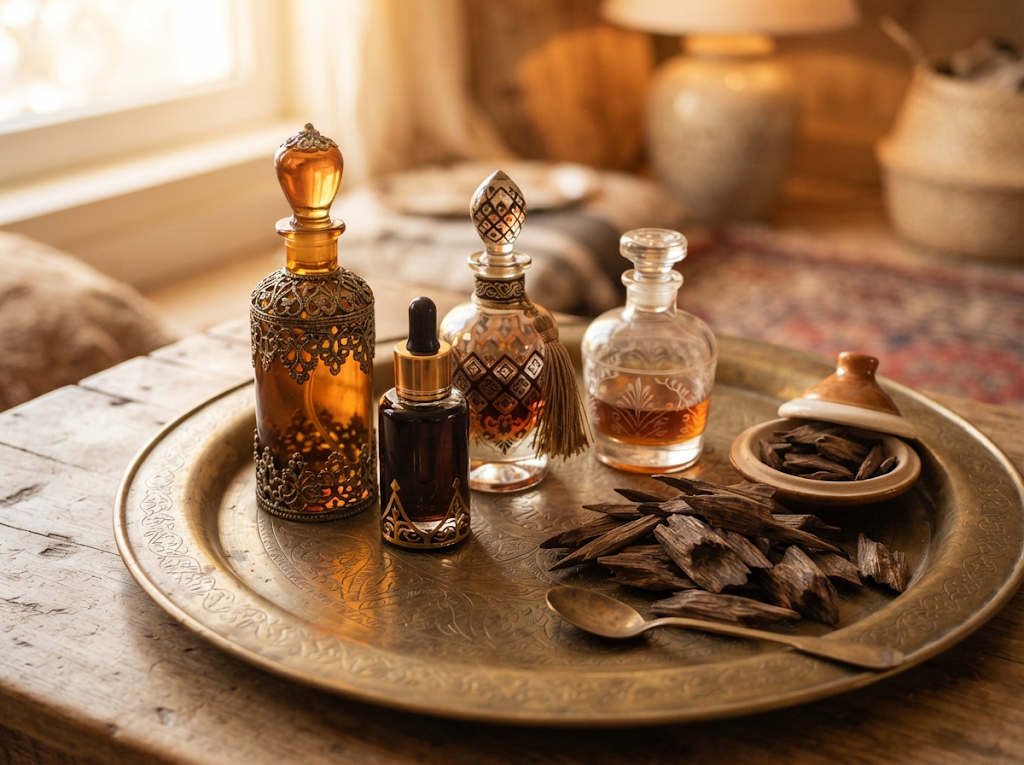
In the souks of Muscat, Dubai and Riyadh, the smell of oud reaches you long before you find the shop. Perfume houses in the Gulf blend aged agarwood, rose, amber and musk into scents that sell for hundreds of dollars per bottle, and a growing number of them now ship directly to customers in Europe, Britain and North America. A perfume is sold through its story, and when the English description of that story is flat or incorrect, the scent loses half of its value before the bottle is opened. This article explains how Arabian perfume makers can prepare their English product pages, labels and trade papers with the same care they give to the blend.
Telling the Story of Oud
Oud is a resin formed in agarwood trees, and its price depends on origin, age and distillation. Buyers abroad often know little about it, so a short and honest explanation helps. Describe how the wood is harvested, how long it is aged and why the scent is warm, smoky and deep. Avoid claims that cannot be proven, such as the oldest or the rarest, and let facts and craft speak. A paragraph about the family workshop is more persuasive than a long list of adjectives.
Scent Notes Without Confusion
Perfume descriptions use top, heart and base notes. Arabic names for ingredients and blends are poetic, and a literal English version can sound strange. Keep the original name where it has meaning, and add a simple English explanation in brackets. Use the same note names in every product page, so a customer who compares three bottles can see the differences. A single table with scent family, intensity and best season is easy to scan on a phone.
Labels, Ingredients and Warnings
Selling perfume in Europe or the United States requires a list of ingredients, warnings, volume, batch codes and the name of a responsible company in the market. Allergens must be listed in the format required by local law. The trade association Cosmetics Europe provides information on regulation and good practice at cosmeticseurope.eu, and it is a helpful starting point for exporters. Do not rely on a casual translation for this part, because a missing allergen can stop a shipment or lead to a recall.
A Partner for Arabic Texts
A house that produces catalogues, labels and contracts needs consistent language across every file. A specialist offering arabic language translation services can handle both the poetic text of a brand story and the strict wording of a safety notice. Explain to the translator which parts may be adapted creatively and which must stay exact. Provide the formulas for names, the approved ingredient list and the tone of voice you want the brand to keep.
Distributors, Agents and Contracts
Many perfume houses grow through distributors abroad. A distribution agreement should define the territory, the products, the minimum orders, the prices, the use of the brand name and the way the contract ends. Review the English version with a lawyer in the target country. Our article on GPSR translation requirements explains why product safety information must be available in the language of the buyer, and the same principle applies to every consumer product that crosses a border.
Packaging and Gift Sets
Beautiful boxes carry information too. Gift sets should list the contents, the volumes and the care instructions in clear English. If the box has a poem or a blessing in Arabic, provide a short English version on a leaflet so that the gift giver understands the message. Keep the design clean and place the legal text where it can be read without breaking the look of the box.
Online Shops and Customer Service
Online buyers cannot smell the product, so the words must work harder. Write short, vivid descriptions, add photos of the bottle in daylight and offer sample sizes. Customer service replies should be quick and polite, with clear answers about delivery, customs duties and returns. A scent is a personal purchase, and buyers appreciate a team that listens and explains without pressure.
Events, Fairs and Boutique Visits
At international fairs and boutique events, staff meet buyers who ask detailed questions. Prepare a short English script about the history of the house, the main collections and the care of oud. Print leaflets with the same names used on the labels. If visitors can take away a card with the website address and the scent notes, they will remember the brand and return when they are ready to buy.
Reviews and Reputation
Fragrance communities discuss new houses with passion. Answer reviews with respect, thank customers and share facts when a statement is wrong. Do not argue. A calm and informed tone builds more trust than a defensive one. Over time, the reviews become a record of how well your documents and your product match.
Keeping the Brand Voice Steady
Create a short style guide in English that lists the names of the collections, the preferred spelling of key terms, the tone for emails and the rules for labels. Give it to every person who writes for the brand. When the same graceful voice appears in the shop, on the box and in the inbox, the customer feels that the house is as refined as the perfume itself.